Thursday, September 8, 2011

Blue Lou's Top 10 Moments in Beer History

Stones of Göbekli Tepe

Readers will have noticed a significant slowdown in posts.  There are a number of reasons for that.  One, the summer is actually not when I generally end up at the Center for Wooden Boats, other than for the Festival.  It's hot, it's busy on the docks, and I'm generally doing something else (even if that's just trying to cool down on the deck with a Negra Modelo).  Two, most of my recent posts have been lengthy essays that take a while to research and write, my latest on Jay Bahadur's book being a prime example.  Three, I've been cut off from blogging at work, or at least "while working."  Distraction?  What distraction?  This limitation, however, has led to this post, because my new time killer at my desk has been catching up on National Geographic.  The June 2011 issue has a fascinating article, "The Birth of Religion," on the archaeological site of Göbekli Tepe in southern Turkey.  This site, radiocarbon dated to as early as 11,000 BC, is turning anthropological theory on its ear, because it is the earliest ceremonial structure yet unearthed and yet has no signs of agriculture.  This could mean that "religion" may have led to sedentarism, not vice versa.  It was these two sentences, however, that set my mind working:  "One imagines chanting and drumming, the animals on the great pillars seeming to move in the flickering torchlight.  Surely there were feasts; Schmidt [the chief archaeologist] has uncovered stone basins that could have been used for beer."  So was launched my self-education on the (pre-)history of the beverage tied with rum as my favorite.  I have condensed it down to the following, unapologetically subjective (and not really very condensed) Top Ten List.  Credit goes to Chris Rowley at Foaming Head for laying the groundwork.

Reconstructed beer jar of Godin Tepe

1.  ca. 8,500 BC:  Barley is domesticated.  Anthropologists call it the "Neolithic Revolution"--the first transition from hunting and gathering to agriculture and established villages.  This occurred in a variety of places at a variety of times, but one center was the "Fertile Crescent" that arches from the Nile Delta through the Levant to the Tigris and Euphrates in what is now Iraq.  Barley was one of the first grains domesticated, based on evidence from sites like Jericho and Abu Hureyra.  Beer and bread, or something in between, were not far behind.  The Godin Tepe site in Iran has even given chemical evidence of beer dregs from 3,500 BC.  The Sumerians were especially big beer drinkers.  6,000 years they ago wrote a hymn to the Goddess of Beer, Ninkasi, which also functions as the world's oldest brewing recipe; Ninkasi is now the name of a very fine brewery in Oregon.  The brew of the time was "porridge beer," really a sort of mildly alcoholic bread that was drunk through straws from a tall pot.  The first beer was really the first "ale," i.e. beer made from malted barley fermented at warm temperatures.  This was the booze of choice from the Egyptian pharaohs to the kings and priests of Mesopotamia...and the peasants below.  Unfortunately, two things killed the early reign of beer:  the expansion of the Greeks, among whom wine was preferable, and the expansion of Islam, among whom no one drinks (legally) at all.  But...

Monday, August 22, 2011

Jay Bahadur's The Pirates of Somalia: Time for a Reality Check


That a non-fiction book can be a page turner might be weird to some, but Jay Bahadur's The Pirates of Somalia was completely riveting.  Bahadur is a journalist, but he's also in a way an anthropologist:  He clearly knows that facts gathered from real fieldwork and with real cultural sensitivity are far better than second-hand information and armchair analysis.  Rather than extol his writing, however, I'm going to put here some of the facts about Somali pirates that not only struck me but also would be well to remember in any future discussion.

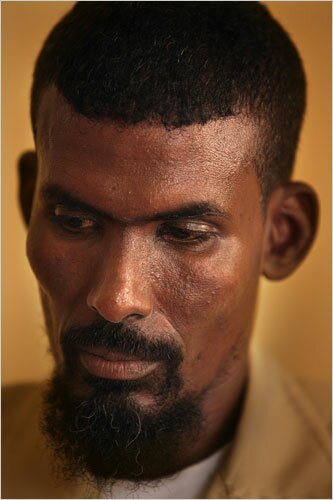
The pirate Boyah
1.  Somali pirates are not all the same.  The historical timeline of piracy in Somalia shows that pirates have different origins, motivations, and methods.  Bahadur describes three "waves" of piracy.  The first wave, beginning roughly with the collapse of the central Somali government in 1991, consisted largely of "marine muggings."  This was the mythical era of the fisherman-pirate, struggling against outsiders first by taking on foreign trawlers and then by attacking any passing, worthwhile target.  Eyl was the pirate haven of the day, and one of the chief operators was Abdullahi Abshir, better known as "Boyah," one of Bahadur's main subjects.  The second wave began in 2003 with the rise of Mohamed Abdi Hassan, alias "Afewyne" ("Big Mouth").  Afweyne was--and is--a businessman, and his "Somali Marines" out of the ports of Harardheere and Hobyo are organized in a military fashion.  The targets got larger:  A joint operation between Eyl and Harardheere, crossing not only geographical lines but also clan lines, captured the now-famous MV Faina with its load of tanks.  Yet, in spite of bigger targets and bigger ransoms, these pirates called themselves "Coast Guards" to at least look they were protecting Somalia from evil foreigners.  As recently as February 2011, Afweyne has been described online as a "Robin Hood" for Somalia.  The third wave began, perhaps, in 2008, when the security sector in Puntland collapsed, leaving trained men unemployed and available to go on the account.  Bahadur calls these most recent pirates "opportunists" on the coattails of men like Boyah, Afewyne, and a third kingpin, Garaad Mohammed, who has taken credit for the Maersk Alabama.  Garaad has recently gained attention when the ransom intended for the MV Yuan Xiang, captured by men under his command, was seized in Mogadishu, resulting in the arrest of three Britons.  The lesson here is simply that the Somali pirates should not be viewed as a unified force:  Time, place, and culture make each group unique.  The one constant is the "fisherman" story, which now must be seen as a public relations strategy not a universal fact.

Saturday, August 6, 2011

The best cocktail container ever

One, it's recycled.  This is an Atlas jar that then became a sauce jar which has now become a jar to get sauced with.  Drink and be green!

Two, it shuts.  It can fall over.  It can be a shaker. It can go in the drink but still be your drink.  It keeps things like limes and carbonation fresh.  And it keeps out what I call "float planes," insects that fly but like to park in the water...or your booze.

Three, it's glass.  None of the funky tastes that come from plastic, Lexan, or (brr!) metal.  It's proper, tho' I'll admit that it's more BBQ joint than Ritz.

Four, you can always get another one.  Do you think highball glasses are in endless supply?  How many Crate & Barrels will you be able to find after the zombie acopalypse, unless you end up in the right mall?  There will always be a grocery store to raid.  You'll be able to get your non-spoiling food supply and, after dinner, a cup for your bathtub hooch.

OK, this may not be original, but today, as we made a 60-inch plastic kiddie pool into an adult escape--a $13.99 hot tub?--this jar became beautifully practical.  So go make some spaghetti, run the empty jar through the dishwasher, and then put your favorite beverage in your newly repurposed wonder.

Thursday, August 4, 2011

Booze and Boat Bits #3 (5 short items of interest)


1:  Move over Somalia, there's a new pirate hot spot:  Nigeria.  An article for the AFP indicates that there is a surge in maritime attacks in West Africa, and specifically in the Gulf of Guinea.  Fact is, this is neither surprising nor new...just new to me.  After only a quick search, I found online articles about Nigerian pirates going back to at least 2008.  There's even a short Wikipedia entry.  Nigeria is well known for its organized crime, from drug trafficking to international fraud.  This is one of the things that makes piracy here very different from piracy off the Horn of Africa.  I'm learning (see my comments about Jay Bahadur's book below) that the Somali pirates are opportunistic and do not have what could be called long-term structure.  The Nigerians, in contrast, are all but militaristic.  They have to be:  Their prime targets are oil tankers, and they're not after ransom but the cargo itself.  The Nigerians, heavily armed and working in organized groups of high-speed boats, seize ships which they divert to waiting facilities so that the oil can be sold on the very busy, lucrative black market.  Although the pirates are Nigerian, their safe harbor appears to be Benin.  The navies of both countries seem to be unable--or unwilling--to handle the problem.  I'm curious to see what the international reaction is going to be.  Nigeria, Africa's biggest oil-producing nation, supplies a full fifth of the United States' imported oil.  Guess what, we've got more modern pirate news to watch for.

Friday, July 29, 2011

Ethics of a Sinking Lifeboat: Abandon Ship! and the Case of the William Brown

By the wonderful powers of On Demand, last weekend Zanne, Bev, and I watched a movie that Zanne had been recommending for some time, alternately known as Abandon Ship! or, more poetically, as Seven Waves Away.  The movie stars Tyrone Power, a man in the same classic movie firmament as Flynn and with piratical cred to boot.  He crossed swords with Basil Rathbone in The Mark of Zorro; Rathbone claimed Power "could have fenced Errol Flynn into a cocked hat."  He crossed wits with my favorite swashbuckling Hollywood redhead, Maureen O'Hara, in the essential The Black Swan.  Abandon Ship!, however, is a nautical movie but not an action movie.  This is a play on the water, a drama that takes place entirely in a lifeboat.  After their ship, the ocean liner Crescent Star, hits a rogue mine and sinks in seven minutes, the twenty seven survivors crowd onto a boat designed for nine.  Power's character, Executive Officer Alec Holmes, is given command of the boat when the Captain passes away.  As the weather worsens, Holmes has to make a terrible choice:  If all stay on the boat, perhaps no one will survive, but in order for some to survive, passengers have to be sacrificed to the sea.  He opts to keep those both useful and more likely to survive; the wounded and the cowardly are, essentially, discarded.  Holmes also keeps his girlfriend, the ship's nurse, and a sassy, sexy socialite portrayed by the elegant Moira Lister.  The movie is an exploration of moral dilemma.  It is also based on a real historical event, a key case in the annals of United States law, and a fascinating instance of ethics being tested by the harshest reality.